- Basis Points
- Posts
- Kerr Neilson's stark warning on oil & his top contrarian ideas
Kerr Neilson's stark warning on oil & his top contrarian ideas
Plus: He declares the death of US dominance and predicts gold will hit $8,000.

Equity Mates
March 11, 2026


7 expert investors pitching their best ideas for 2026.
This is your final call to join us on The Island for our inaugural Basis Points Boat Party.
Tickets are complimentary to the Basis Points community – use code BPBP_TIX at checkout.
Spots are limited and exclusive to advisers. Please ensure you can commit to the afternoon before securing your spot.

This week: Kerr Neilson sits down with Basis PointsNeilson, the legendary contrarian investor behind Platinum, lays out a bold case for why the next decade may belong not to AI darlings, but to “atoms over electrons.” Don’t miss this episode, where Neilson dives into the biggest risks and opportunities in markets today. |  |
Kerr Neilson on oil shocks and why gold will hit $8,000
After a decade of dominance in the mega-cap tech stocks, Neilson argues markets are entering a period of profound disruption. He points to geopolitical fragmentation, war in the Middle East, and fragile global oil supply as long-term threats, and warns these forces are reshaping markets.
And yet, Neilson, ever the contrarian, is still finding plenty of opportunities. He believes that commodities are finally emerging from their era of underperformance (see chart below), and reveals that precious metals sit at the core of his own portfolio, with platinum (the metal, not the firm) a standout.
Likewise, he believes that gold will continue on its upward trajectory. Fuelled by global fragmentation, currency debasement, and rising geopolitical risk, Neilson argues it could hit $8,000/oz - despite the shrinking (or non-existent line) outside ABC Bullion in Sydney’s Martin Place.
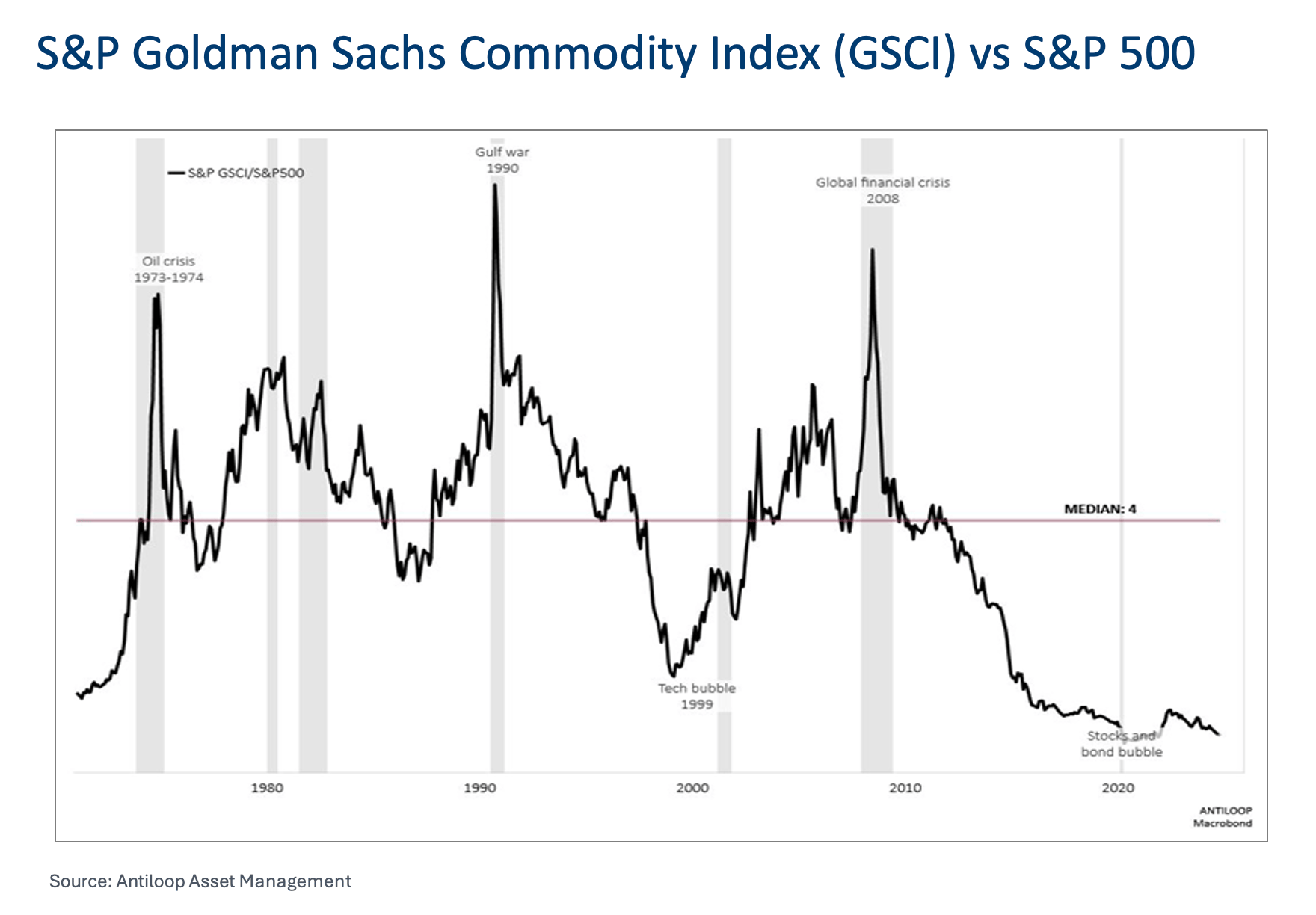
The performance of commodities compared to the S&P 500 over the last five decades. Commodities are trading at historically low levels in comparison to equities.
He’s equally focused on oil, calling supply disruption the biggest risk facing markets today. With shale production stabilising and demand still climbing, he argues that even small shocks could have outsized price impacts. Not to mention that 20% of the world’s oil production runs through the currently shuttered Strait of Hormuz - which Neilson believes could be disrupted far longer than the market is currently pricing in. Meanwhile, he argues that emerging markets, rich in natural resources, are regaining appeal as the US dollar’s dominance gradually erodes.
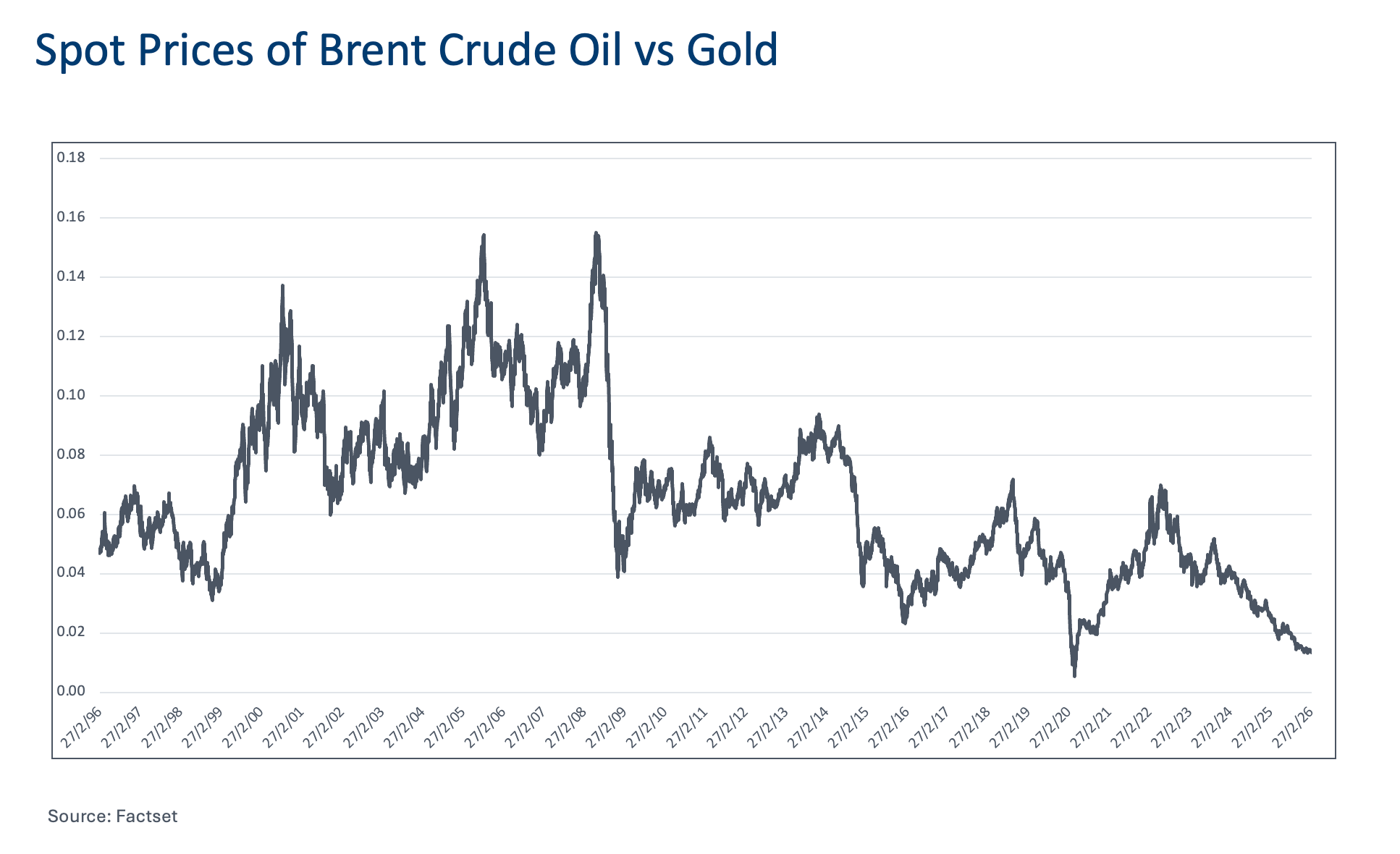
The historical price relationship between oil and gold over time. Crude prices are relatively cheap compared to gold and have been tracking southwards since the GFC.
Beyond the macro themes, he offers practical insights for advisers: the dangers of crowded trades, the inefficiencies created by passive investing, and the importance of contrarian thinking in an ETF-dominated world. His message is clear. The biggest opportunities often lie where capital has been scarce.
For investors navigating an uncertain decade, Neilson’s perspective is both a warning and an invitation: look beyond the obvious, question consensus, and prepare for a world where real assets once again drive returns.

5 key lessons from Kerr Neilson for today’s markets
1. We may be entering a new commodity supercycle
Neilson believes commodities are emerging from a prolonged bear market relative to equities. After years of underinvestment, supply constraints are building just as geopolitical fragmentation intensifies. He argues this sets the stage for structurally higher prices, particularly in energy, precious metals, and chemicals.
2. Oil supply is the biggest immediate risk in markets
Neilson warns that even marginal disruptions to oil supply could have outsized and prolonged consequences on markets. With global trade heavily dependent on stable energy flows, small shocks could materially reprice risk assets.
3. Precious metals (especially platinum) are still undervalued
Gold remains a core holding for Neilson as a hedge against global fragmentation and currency debasement. However, he is even more bullish on platinum, arguing that 15 years of stagnant prices, declining reinvestment, and concentrated supply (primarily South Africa and Russia) create asymmetric upside.
4. Passive crowding is creating opportunities for contrarians
Neilson sees the rise of ETFs and index concentration in mega-cap tech as a paradox. As capital crowds into fewer names, price discovery weakens elsewhere. This creates inefficiencies and opportunities for active, contrarian investors willing to look beyond the “Mag 7”.
5. “Atoms over electrons”: Why investors should own real assets
Neilson’s overarching message was to focus on physical production capacity rather than purely digital growth. That means energy, agriculture, chemicals, metals, and other capital-intensive industries where supply takes time and investment to expand. In a world of political and economic disruption, Neilson believes that tangible assets may regain pricing power and investor favour. For more on this opportunity, read this Substack piece here, which was recommended by Neilson.

Introducing you to a new segment of your weekly Basis Points emails, where we will be sharing some of the hottest gossip sweeping through the advice industry. If you have a tip, please let us know at the link below. All tips are anonymous.