- Basis Points
- Posts
- War, rebounds & rate hikes: Why you shouldn’t go all-in on equities
War, rebounds & rate hikes: Why you shouldn’t go all-in on equities
Canaccord Genuity CIO David Cassidy shares his playbook for advisers for the rest of 2026.

Equity Mates
April 29, 2026


This week: David CassidyThis week, we were joined by David Cassidy, the CIO of Canaccord Genuity. He shares the key risks to markets he believes investors are underappreciating, as well as how he is positioning portfolios in light of this. | 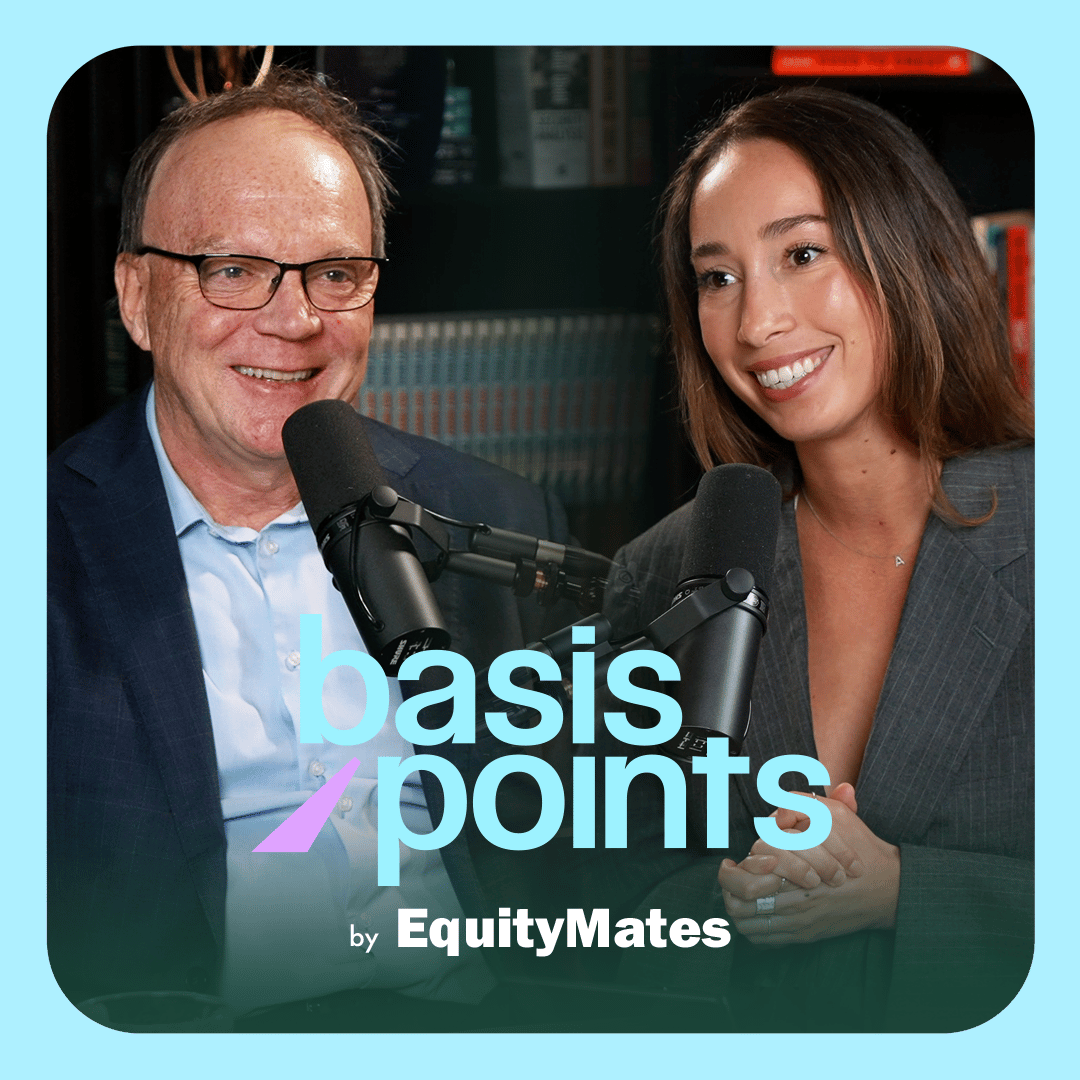 |

War, rebounds & rate hikes: Why you shouldn’t go all-in on equities
A few weeks ago, things looked bleak. The US-Iran conflict had rattled energy markets, equities were selling off, and investors’ nerves were high. Then, almost as quickly as it began, markets bounced, with the S&P 500 already higher than it was when the conflict started.
Canaccord CIO David Cassidy finds that rebound interesting. Not wrong, exactly - both sides have genuine incentives to reach a deal, and markets are usually pretty good at sniffing that out. But a lot of good news is now priced in before a resolution has actually landed. That's a different kind of risk.
Other than the Middle East, David is keeping a close eye on the RBA. He's blunt with his analysis, arguing the central bank is backward-looking by nature, and responding to inflation and unemployment data that doesn't yet reflect a slowing economy. He believes the slowdown is already happening - it just hasn't shown up in the numbers. If the RBA hikes again in May, the second half of the year could turn uncomfortable for domestically exposed portfolios.
That's the lens through which he's building portfolios right now. Global equities over domestic. A recent move from underweight to slightly overweight Australian fixed interest, with 10-year bond yields just above 5%. Although that may not sound exciting to some, it could potentially be very rewarding as yields fall in a slowing economy. He’s also finding opportunities across the spectrum in private markets.
His clearest avoid is Australian banks. He argues the valuation run of the last three years has simply outpaced the earnings story - and Commonwealth Bank, for all its quality, is the most obvious example.

David Cassidy’s 5 lessons for navigating markets in 2026
1. The RBA is the risk nobody is talking about
Markets are fixated on the Middle East, but David is equally worried about whether the RBA hikes into an economy that's already rolling over. He argues the slowdown is real, and for advisers with heavy domestic equity exposure, that's worth mulling over now.
2. 10% corrections are almost always opportunities
Markets only have genuinely bad years when recessions hit, and US recession risk remains low unless the Middle East conflict becomes protracted. The temptation to go defensive at the lows is usually the most expensive decision investors make.
3. PE ratios don't tell you much without the earnings growth context
Calling tech expensive based on multiples alone misses the point. David's framework instead poses whether earnings growth justifies the valuation. For large-cap US tech, the answer over the last decade has repeatedly been yes. The real trigger for a de-rating is a deterioration in the profit outlook.
4. The SaaS sell-off has been indiscriminate
AI disruption fears have hammered the entire SaaS sector without distinguishing between businesses with genuine moats and those without. David believes that companies with proprietary data sets, like Xero and TechnologyOne, are being caught up in broad sentiment-driven selling. The market, he argues, is underestimating how resilient some of these business models will be.
5. Rare earths are a major opportunity, and prices could reach “extreme levels”
Most of the world's rare earth supply is controlled by China. With demand growing across EVs, wind turbines, robotics, and defence, David believes demand will exceed supply over the next five to ten years. With so few quality producers outside of China, he points to Australia's own Lynas Rare Earths as a rare asset worth backing.
Anacacia Capital

Advisers and investors partner with Anacacia for an experienced, aligned team with a long track record of investing in leading small to medium enterprises.
Since Jeremy Samuel founded the firm in 2007, the firm has managed over $1 billion from the team, family offices, high-net-worth investors, institutions and advisers.
There are 3 sets of funds. The Anacacia Wattle Fund has developed an enviable record on Australian/NZ small-cap listed equities. The Anacacia Global Fund has a small and micro-cap international focus for investors wanting to balance the home country bias. Anacacia focuses on capital preservation while targeting strong absolute returns in the medium term. Anacacia’s private equity funds have delivered world-class returns in the private mid-market.
Anacacia’s listed equities funds are available on the Netwealth platform and can also be accessed directly by selected investors and advisers.


David’s “chart of the week” highlights the outperformance that tech has experienced in this market rebound post the sell-off in March. This includes communication services (Meta and Alphabet), IT (Nvidia, Apple and Microsoft) and even US consumer discretionary (Amazon and Tesla), which all make up the strong mega-cap tech rebound.
“As long as the global economy is expected to be okay - it doesn’t have to be spectacular - but reasonable, tech is still expected to be the place where the growth is,” David said.
Whether that profit story continues or not will be seen over the next few weeks as the world’s biggest companies report. That said, David believes the US tech sector is still very well positioned for the AI buildout. Valuations aren’t cheap, but they are probably a bit better than they were six months ago, he adds.

In case you missed it, 5 Financial’s Jason Petersen shared how his military background influences his advice practice last week, and outlined why the firm is backing a purely market-beta model.