- Basis Points
- Posts
- Why inheriting a fortune can tear a family apart - and how to stop it
Why inheriting a fortune can tear a family apart - and how to stop it
Plus: How to scale your business without compromising on quality advice

Equity Mates
March 25, 2026

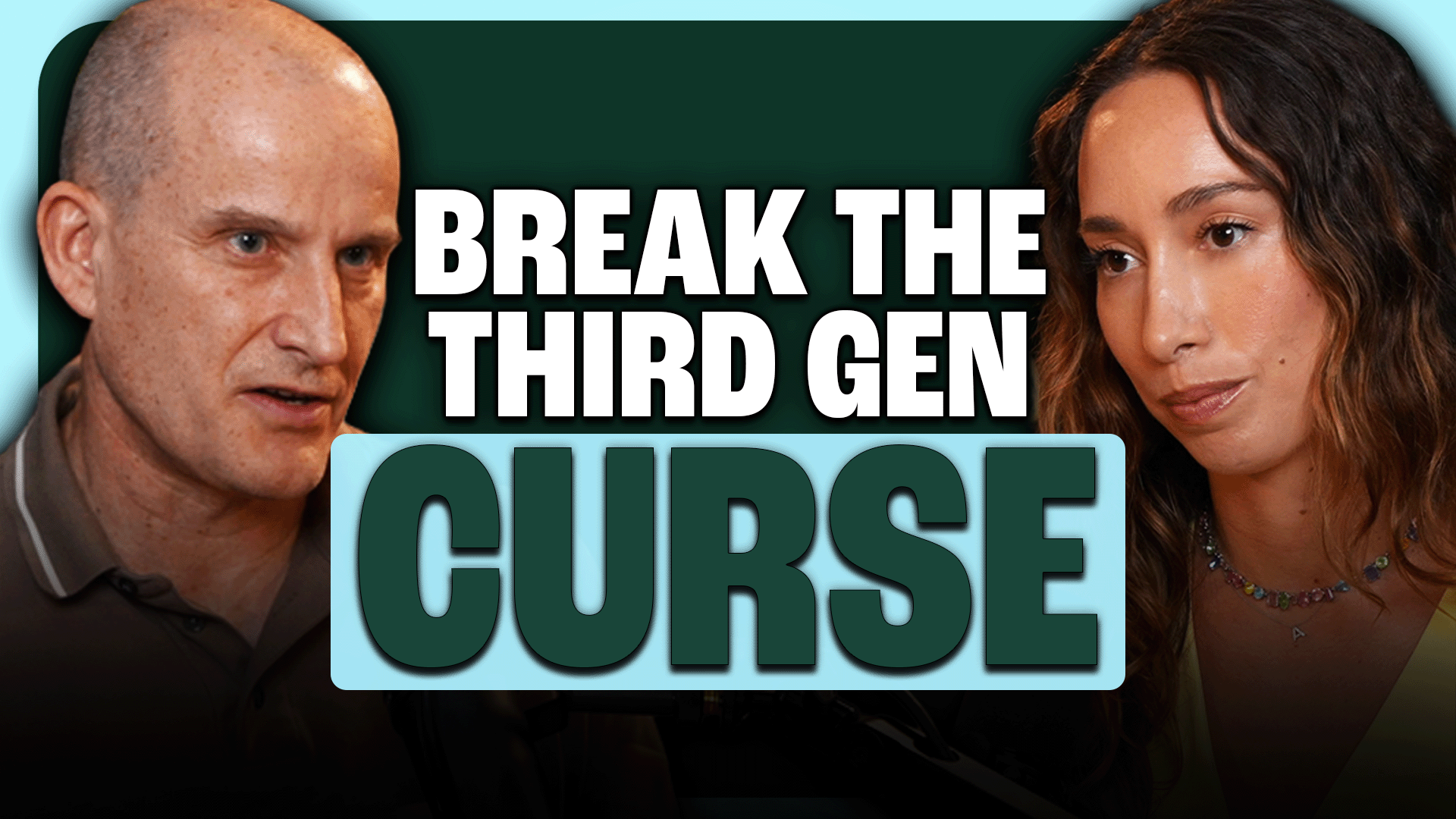
This week: Paul BurgonThis week, we’re joined by Paul Burgon, the Managing Partner and CIO of Lipman Burgon & Partners, who ranked #4 in the 2025 Barron's Top Adviser List. Burgon argues the biggest concern facing his clients is the “third-generation curse” - and he may just have the cure advisers are looking for. |  |
Why inheriting a fortune can tear a family apart - and how to stop it
The “third-generation rule” (or curse, for those who live through it) is the belief that wealth created by the first generation is often lost by the third.
A 20-year research project by US wealth consultancy firm The Williams Group found that 70% of the 3,250 affluent families they interviewed lost their wealth by the second generation. Siblings sued one another, resigned from trustee positions out of fear of being sued, withdrew from family life or lost their assets. It’s widely accepted that by the third generation, 90% of the wealth created by the first generation has vanished.
Perhaps not surprisingly, then, The Williams Group also found that most families were less concerned about the size of their estate, focusing instead on the impact it would have on their “unprepared” heirs.
Lipman Burgon & Partners CIO and Managing Partner, Paul Burgon, echoes this sentiment, pointing to succession and generational concerns as the number one problem facing his clients.
“Wealth is like petrol,” he explains. “It can fuel this incredible engine of opportunity. It can also, just as easily, blow it up.”
Equally, succession and next-generation alignment should be a key priority for advisers. With $3.5-$5 trillion expected to change hands by 2034, Burgon believes that advisers should be doing the work now to engage with family members to build trust, so that they can retain the next generation when parents pass.
Having spent 15 years transforming his boutique wealth management firm from its $400 million beginnings to the $3 billion FUA giant it is today, Burgon has established himself as one of Australia’s top advisers. He ranked #4 in the Barron’s 150 Financial Advisers List last year - his eighth consecutive year in the top 25.
In this episode of Basis Points, Burgon shares the philosophy that has helped drive the firm’s growth, including strict client caps, a firm-first (not adviser-first) client ownership structure, and a deepening focus on family governance and next-generation engagement.
He also shares how Lipman Burgon is embracing AI, the risks facing advisers who ignore it, and why he believes that empathy will matter more, not less, as the technology accelerates.

5 key lessons from top-rated adviser Paul Burgon
1. Depth beats breadth (and why you should cap your client numbers)
50 clients per adviser is the hard limit at Lipman Burgon. It sounds like leaving money on the table, but Burgon sees it differently: beyond that number, you're skimming the surface. Real advice, the kind that covers estate planning, succession, family dynamics and everything in between, demands time you simply don't have when you're juggling 100 (or more) relationships.
2. Clients belong to the firm, not the adviser
This single cultural decision changes everything about how a business scales and survives. When clients are tied to a firm rather than an individual, succession becomes an orderly process rather than a crisis. Burgon's approach - where new advisers gradually "steal" the client through over-service and trust-building - is a masterclass in transition done right.
3. The best advisers are becoming trusted family counsellors
Lipman Burgon now runs family off-sites, values-focused workshops and has built a team of family governance specialists. He believes the greatest problems wealthy families face aren't on their balance sheet - they're about how to talk to the kids about money, how to stop the second and third generation burning through what the first built, and figuring out what wealth is actually for.
4. Firms that aren’t using AI are already falling behind
Lipman Burgon has moved from ChatGPT to Claude Enterprise, and is embedding AI across research, due diligence, marketing and business planning. The final frontier is feeding AI models with client data for personalised rebalancing, which he believes Lipman Burgon could be doing in six to 12 months’ time. Burgon’s takeaway for advisers is to have a plan and start working with AI now.
5. Your edge is everything that AI can’t do
The more AI can handle the technical heavy lifting, the more the human element of advice becomes important. During times of market stress, clients don’t want an algorithm - they want someone who knows and understands them. Empathy, judgement, and the ability to navigate complex family dynamics aren't soft skills anymore. They're the whole game.


While there may be cause for concern given continuing geopolitical tensions in the Middle East, and the flip-flopping of bond and equity markets after every Trump tweet, Burgon provides the above chart to signal that it’s not time to sell down portfolios yet.
The chart above tracks the performance of the S&P 500 against the oil price since 1970. The red dotted lines connect the points where the oil price has risen 50% over 12 months. The red-filled drawdowns highlight the times when there was a significant fall in markets.
“To have a major impact on financial markets, oil generally has to have an increase of a 100% over a year… That would be putting oil around about US$140,” Burgon explained.
“We could get there, but what it really shows is there's often an ability to absorb some of these oil market spikes… There's every chance that this will actually pass through without having a major market crash. It would have to be a much more sustained rise in oil prices from here, and for a sustained period of time, to have a major impact.”

AZ Sestante set to shutter ESG SMAs
Specialist investment consultant AZ Sestante is reportedly closing its ESG SMAs. They had previously offered five ESG portfolios across various risk tolerances, having launched them in June 2022. According to an anonymous source, advisers have 90 days to find their clients’ funds a new home.
InterPrac advisers heading to Avalon FS
Dealer group Avalon FS has sent out a liferaft for advisers working for Sequoia-owned InterPrac Financial Planning. Advisers wishing to move to the licensee won’t have to pay the two-year professional indemnity levy imposed on exiting authorised representatives. They will, however, need to sign a statutory declaration stating they have had no dealings with the Shield and First Guardian master funds.
If you have a tip, please let us know at the link below. All tips are anonymous.

In case you missed it, last week, we were joined by Justin Lin, an investment strategist at Global X. While our host, Ally Selby, has long been a sceptic, somehow Lin convinced her that cryptocurrencies should no longer be seen as the playground for scammers and fraudsters, but a regulated ecosystem with assets worthy of a place in strategic portfolios.